
If you are considering starting a flock, or are just getting started with your breeding program, you may wonder how many lambs you will have. I can’t predict that, of course, but I can share my own experience.
Since 2011, we have had 216 lambs born on our farm. After putting Gus in with the ladies this fall, I did some number crunching to generate lambing rate statistics from my records. In 2015 I improved my record keeping, so these are based on 2015-2021. One hundred nine births resulted in 182 lambs, for a lambing rate of 1.67. Some years we bred a few ewe lambs, who tend to have singles if they get pregnant. Without them, the rate is 1.73. I can count on every ewe to lamb every year from age 2 to around 10-12. They are very reliable.
However, not all lambs survive. Our losses to stillbirths and newborn deaths over those 7 springs were 22, or 12%. Some could have been prevented, but I have learned not to beat myself up about what I could have done differently. I’m always learning. In the last 3 years, we have only lost 7%.
So – lambs that survived until weaning were 1.5 per ewe. Good mothering is a top priority in my breeding program, and most of the time, my ewes don’t need anything from me beyond good nutrition. I’ve only had to pull (help deliver) 6 of our 216 lambs. An occasional heat lamp on a cold newborn or a bottle for a hungry triplet helps, but my Babydoll Southdown ewes excel at what they do.
…a note about babydoll color, plus 2020 lambing news
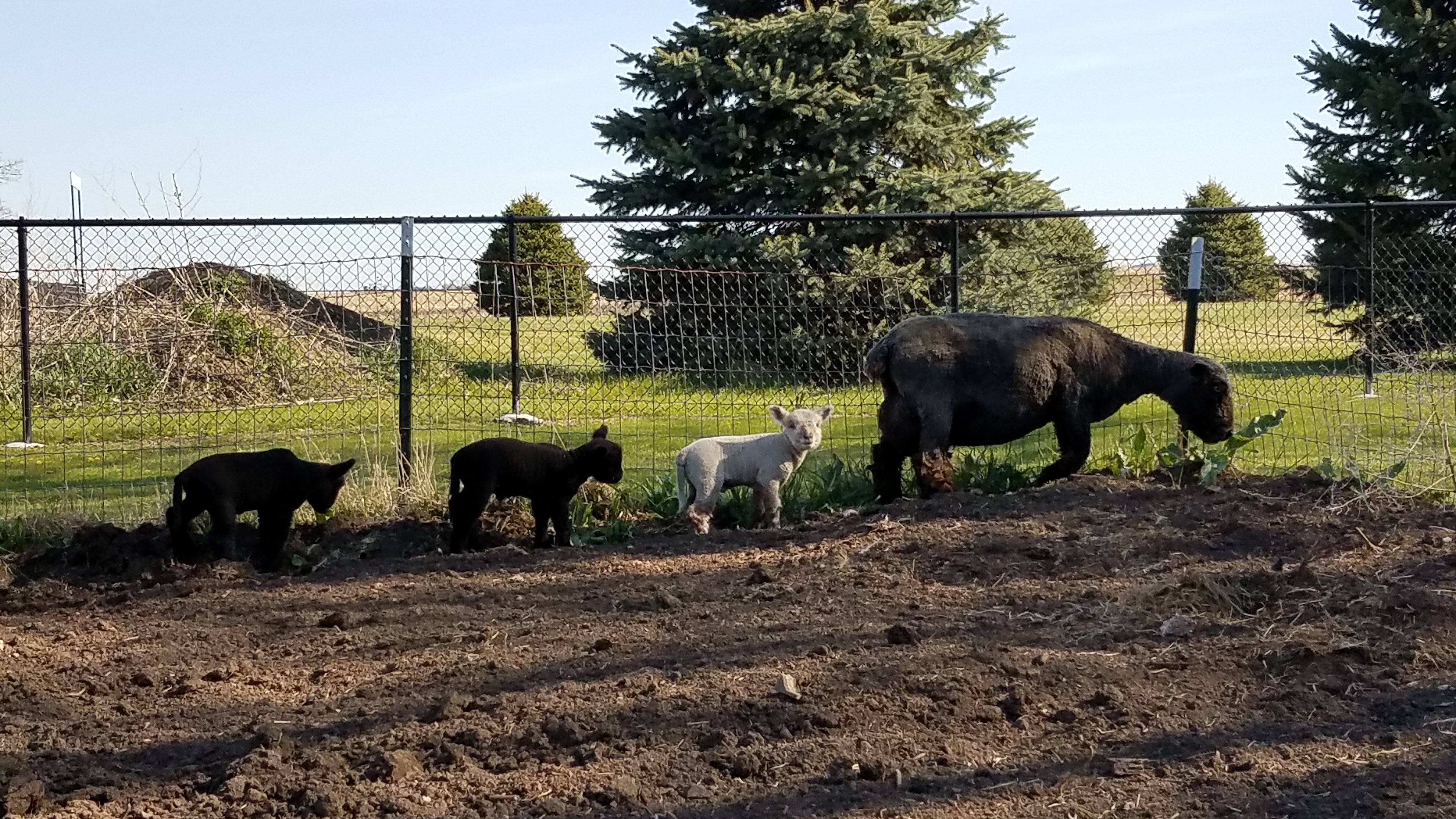 2020 lambing is almost complete. We have a nice group of babies, including 3 sets of healthy triplets! Pictures of available lambs are now up on the “Sheep for Sale” page.
Babydoll southdown sheep come in black and white (also called off-white). There are also a few spotted ones, which we don’t have in our flock and are not recognized by all babydoll registries. Within those colors, there is some variation. A white lamb is born with darker color on its legs and parts of its face, from light peach to various shades of grey and brown.
A black lamb is born the color of coal, then usually fades grayer to some degree as it ages, though the muzzle, ears, and legs stay black. The tips of its wool bleach in the sun, making it look brown unless it has been recently shorn.
Occasionally a “black factor white” lamb is born, usually to a black and a white sheep bred to each other. These lambs have bright white leg and facial wool, do not meet the breed standard, and should not be registered. One of these lambs popped up in our flock several years ago, though I did not recognize it at the time – see pictures of Snowball’s triplets in my post “Lambs!” from 2017. Some breeders breed bred to black and white to white, though each shepherd makes breeding decisions based on what is important in their flock.
I love the variety of colors I see when my lambs are born. I especially like to see nice solid dark or cinnamon colored legs in my white babies, like Gem, below right. For more on babydoll color, see the breed standards posted on the registry websites.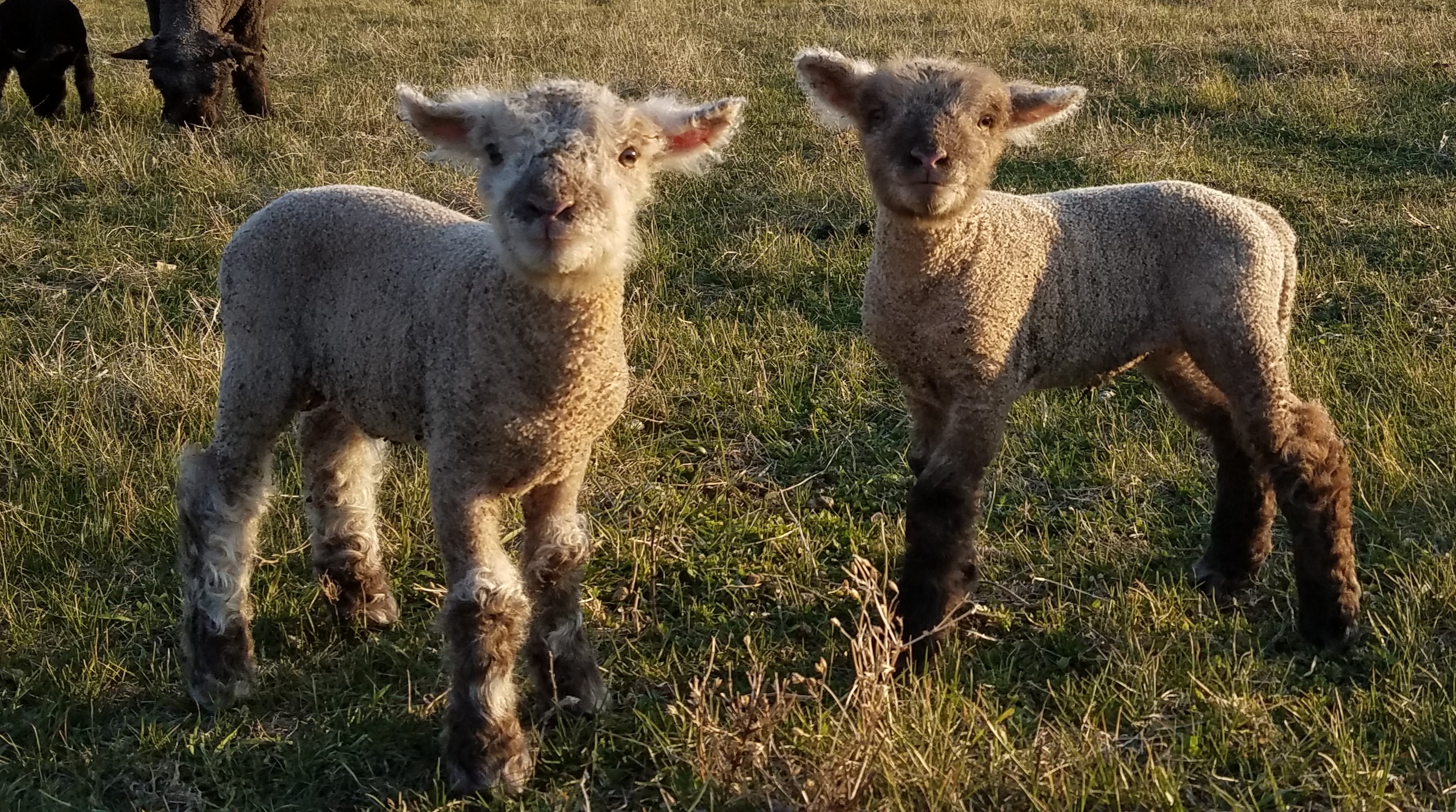
The trickiest parts of flock management come at both ends of life. Today we moved this year’s ewe lambs we retained back in with their mothers to graze a fall pasture loaded with delectable weeds and grass. They have made it through the hazards of lambhood – the chilly spring nights, summer parasite dangers, and weaning. It gives me a lot of satisfaction to see what stout, energetic, adorable little teddy bears they have become.
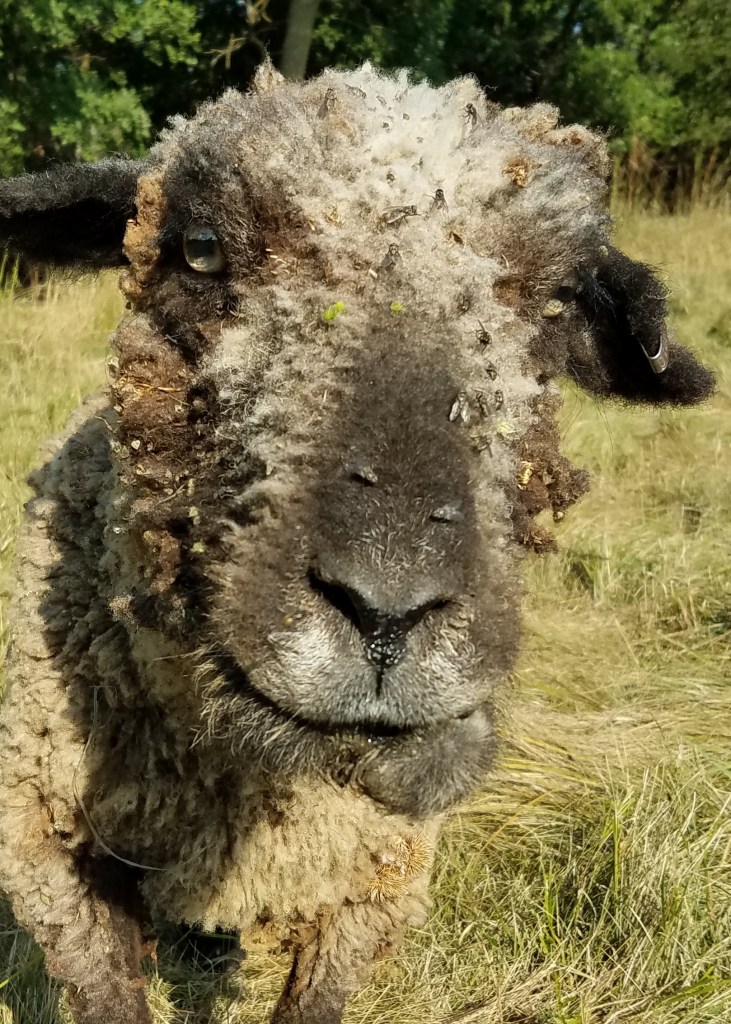
At the other end of of the spectrum, we have four aged ewes born in 2010, the year before we took over management of the flock. They have given us lambs every year since they were two, except Wooly, who had her last lamb at age eight. They are special to us – our oldest daughter named them when she was in first grade, and their personalities are distinct. Most cantankerous of all is Dora – she stomps at me if she has new lambs and thinks I’m invading her personal space, but she is also the greediest if I have a bucket or a handful of grain. Not exactly a beauty (above) since tearing her lower lip as a yearling, she now has a skinny/bony look besides, and today I was sad to see that her walk has become more of a hobble. It’s tough to think about letting any of our grannies go, but we won’t let them suffer if their quality of life declines.
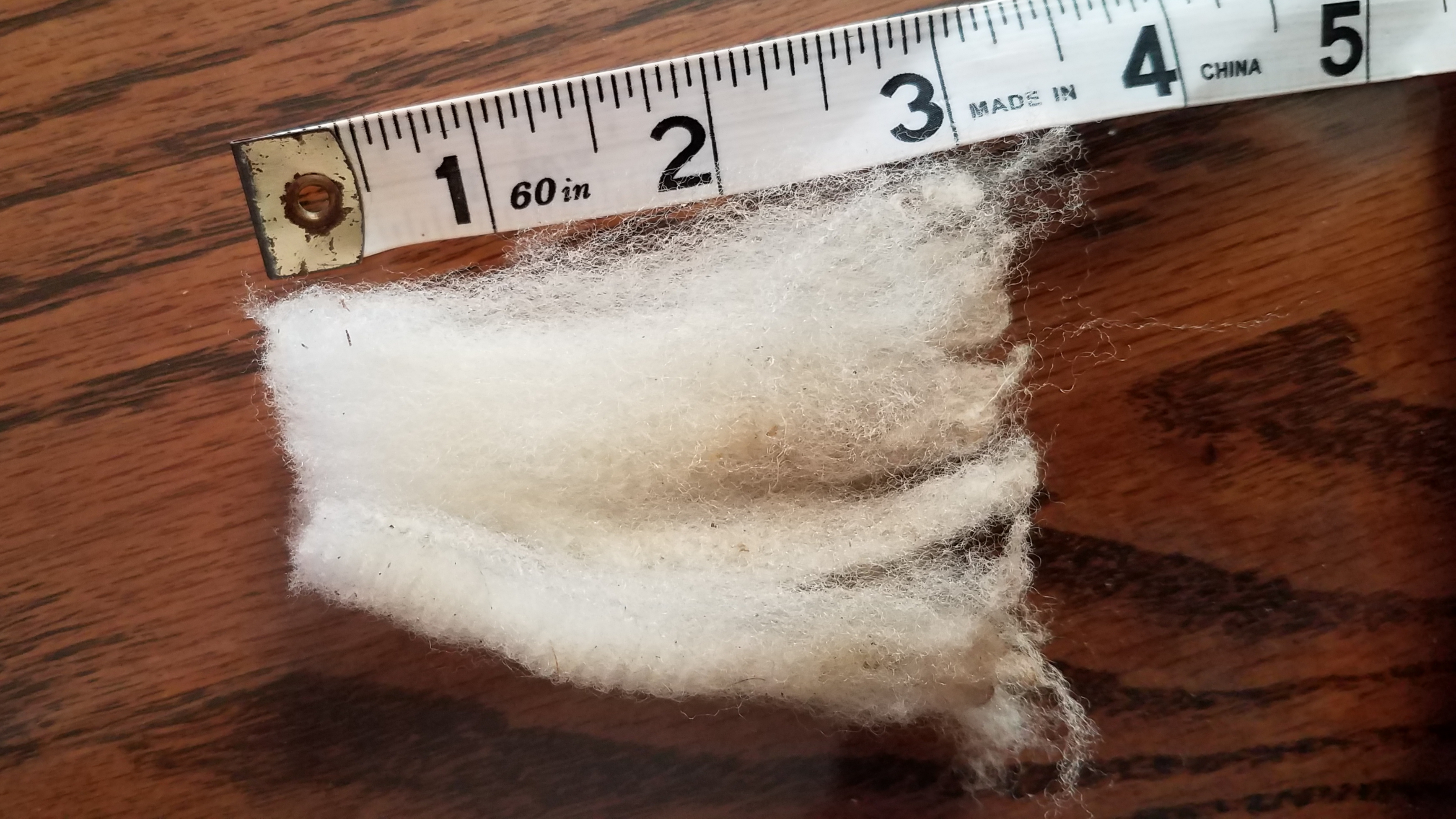 Babydoll fleece is considered short-stapled. At shearing this year (back in March) I measured the wool of each sheep just before it came off. Each fleece had a range of lengths, and I recorded the longer parts, usually the side of the neck/shoulder area. My numbers ranged from 1 3/8 in. to 4 in, with an average of 2.4 in. The yearlings averaged 2.5 in. Brutus’ fleece was the largest, and weighed 6 lb, 3 oz.
I did the shearing myself – a first, beyond dabbling with hand shears here and there. I found the electric clippers to be less intimidating than I expected, though most of the sheep suffered a nick or two. My amateur back muscles protested for the first few days, (ok, I was REALLY sore) but I didn’t do more than 5 sheep per day, and overall I enjoyed the process. I didn’t use the same positions or stroke patterns as the professionals, but found methods which worked for me. For more pictures, see the “Photos” page. 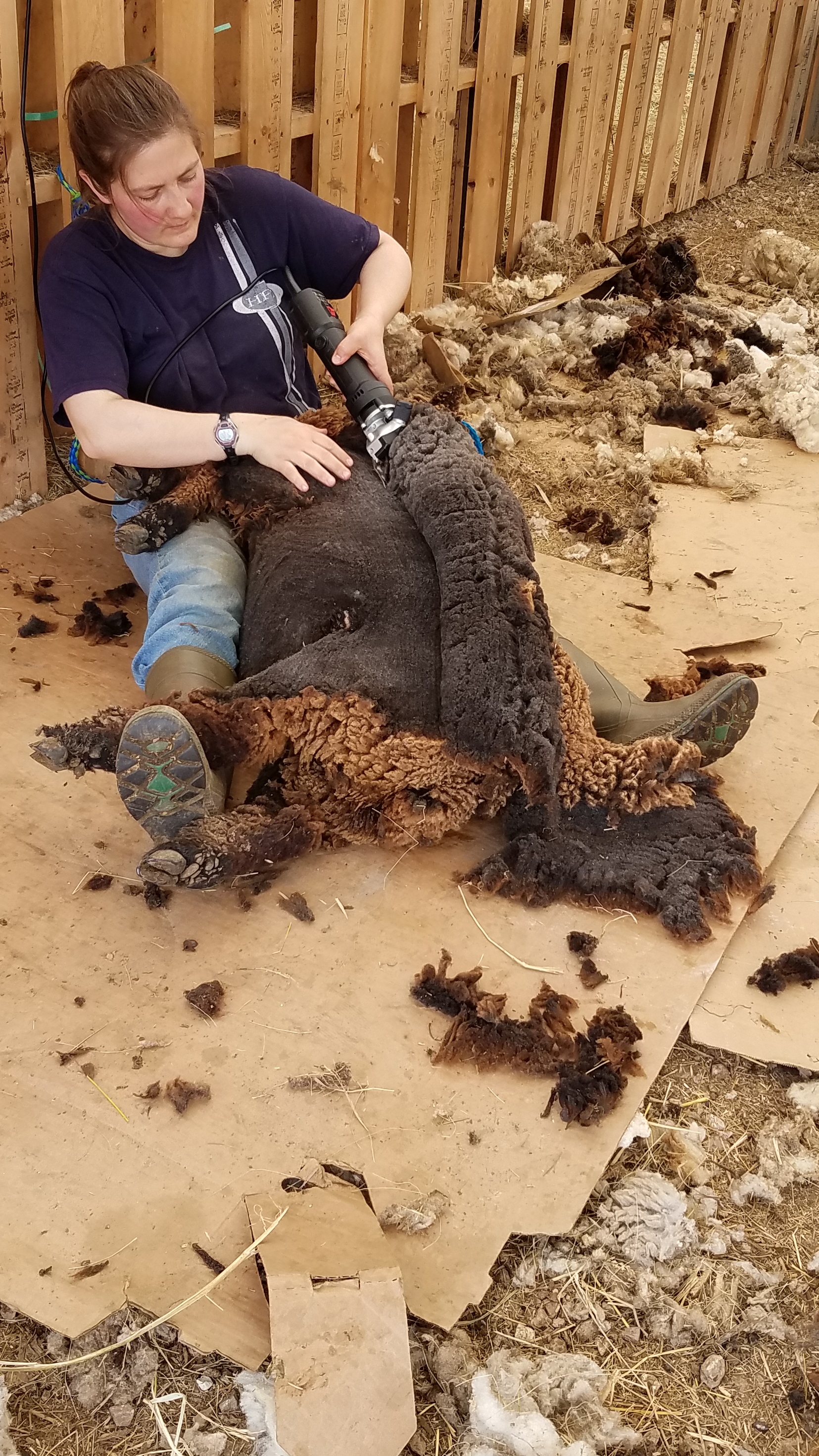


Cattywampus was on hand when Jasmine was started under saddle yesterday, and he decided her first rider ought to be feline. We were pleased that she was just as calm for the cowgirl as she had been for the cat.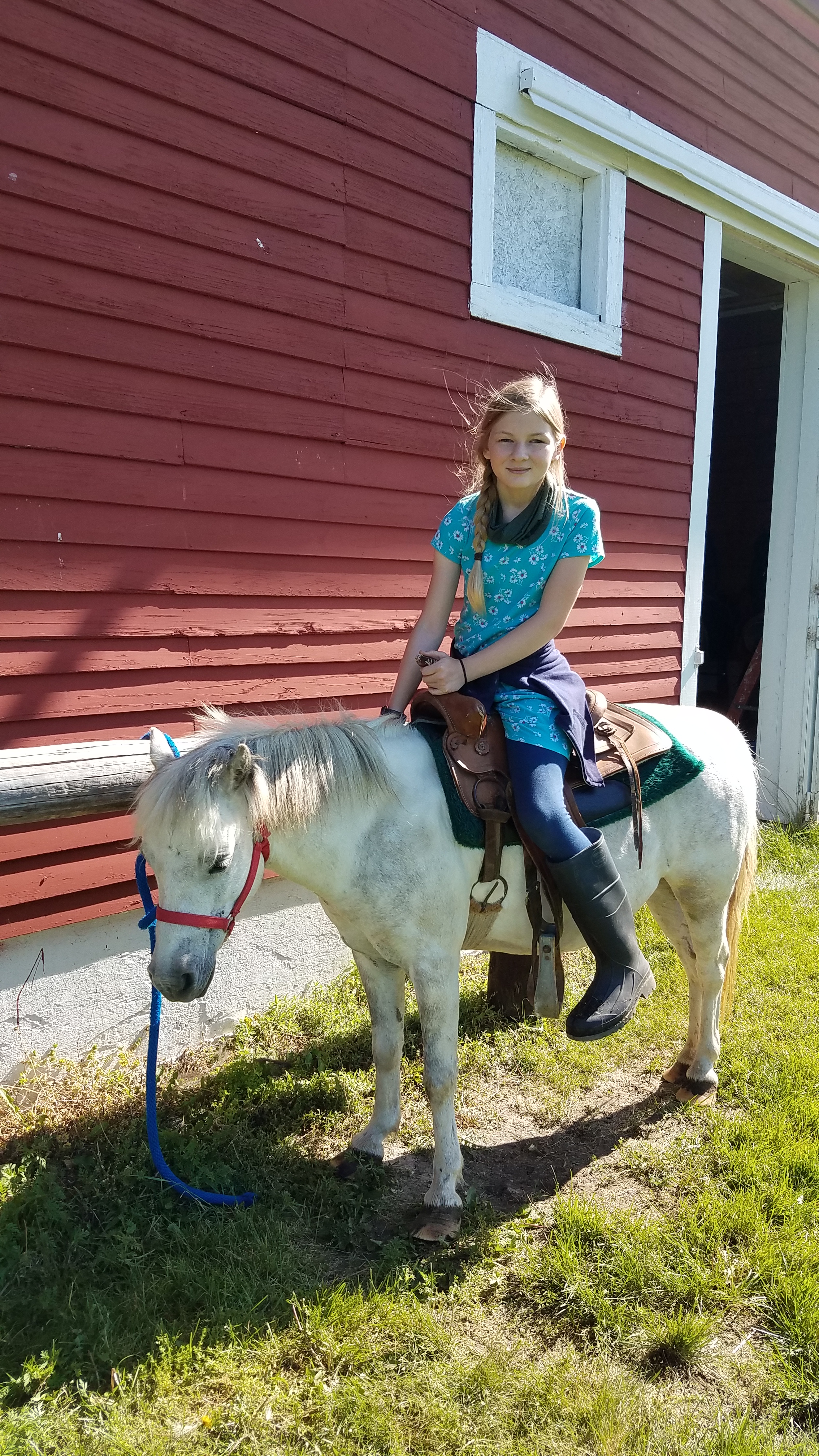


Born this morning – Samson! Sired by Karat, out of Princess. We are thrilled to have a baby to enjoy and halter break this summer.
Update – Samson at 12 days:


6 weeks: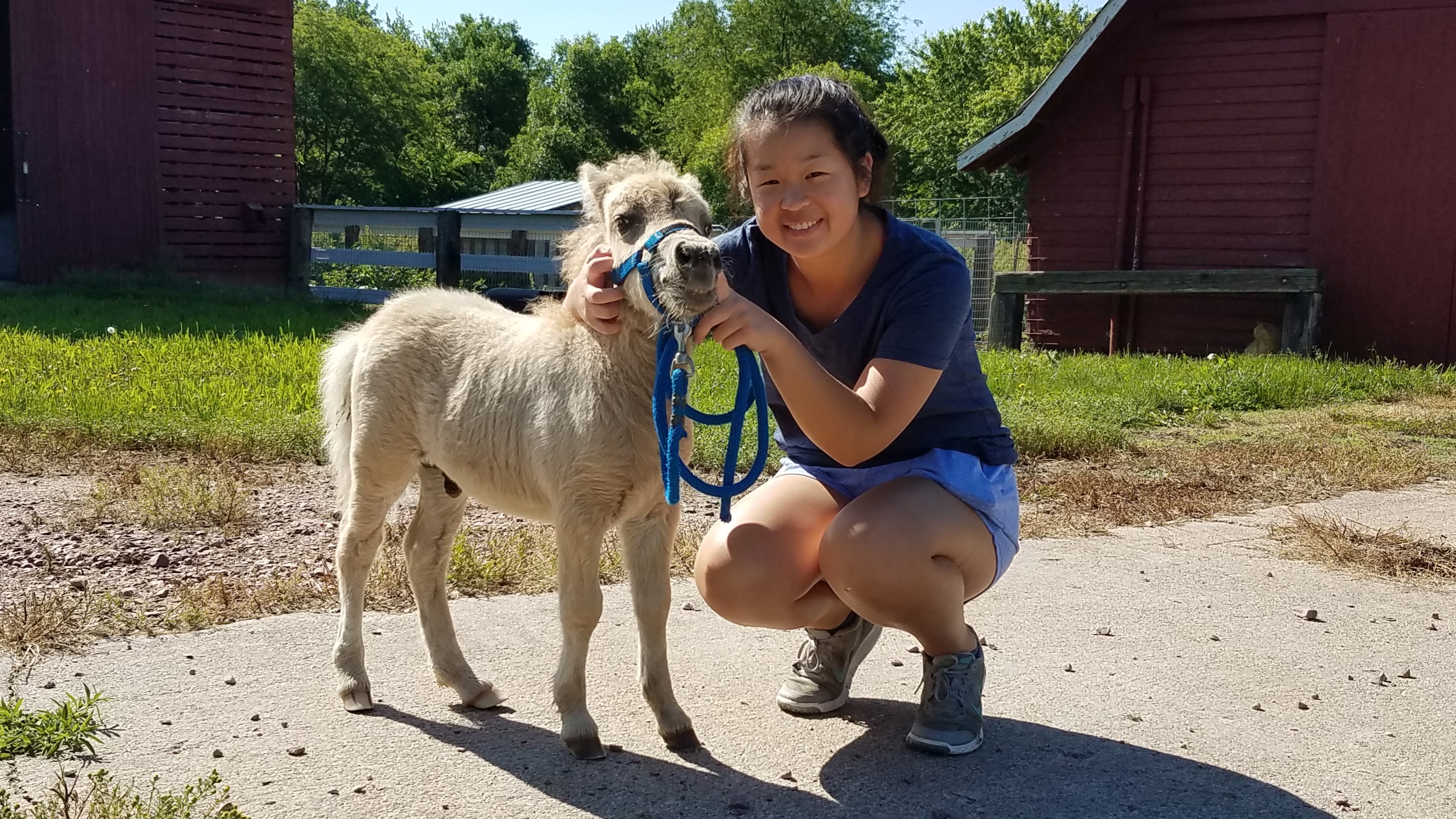


The speed at which these lambs are growing is incredible. All the ewes have lambed, except one old girl who is probably done or taking a year off. (Update – she eventually did have a little ewe!) Every lamb was born live – a cause for celebration, as there’s sometimes a stillbirth or two – a second born twin or a large single for a first time mom. We’re seeing a lot of nice dark legs and very sweet faces on solid bodies that are muscling up nicely. All the ewe lambs are spoken for. We still have a couple of available ram lambs who will be wethered soon if no one requests them as breeding stock. Brutus sired our entire 2018 lamb crop.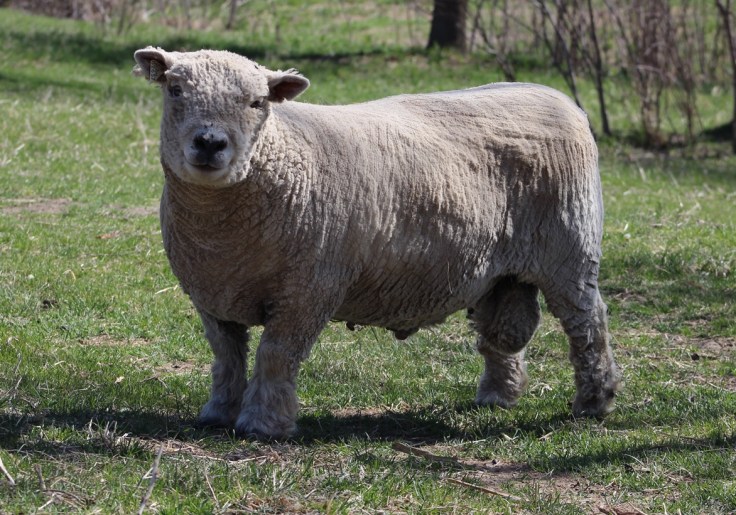
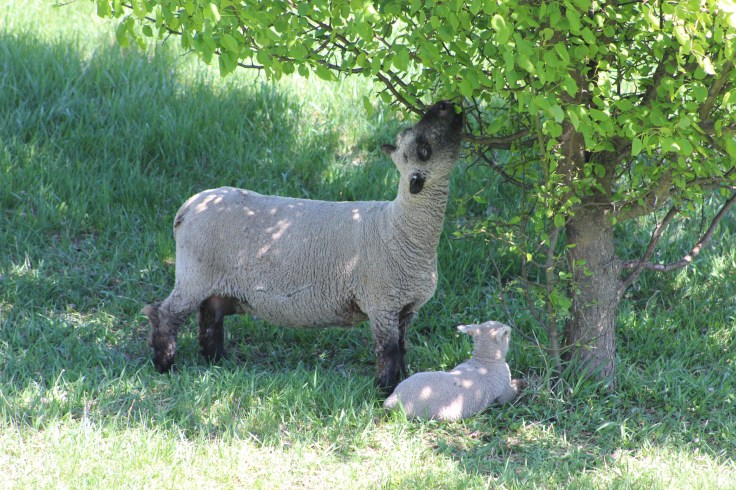
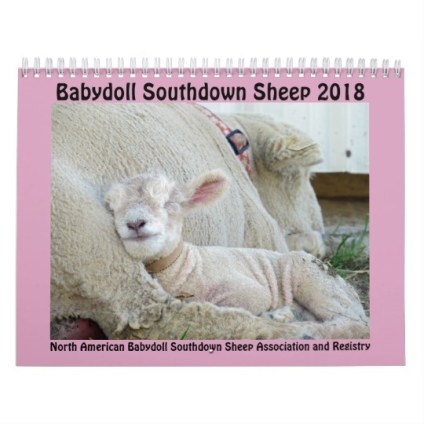
NABSSAR (Babydoll registry) does an annual photo contest and produces a calendar with the winners. Among those chosen this year was Laura’s shot of Quarter and her lamb in the orchard, which will be the September photo for their 2018 calendar.


There’s always lots of work to do on the farm, but nice weather means it’s time for a lot of fun jobs. Grandma Janette has ponies picketed out to graze in the yard every day this time of year. The grandchildren help with this when they visit, as well as with gentling the younger horses, saddle training, and practicing loading on and off the trailer. There’s a nest of kittens to check on in the barn and donkeys who are always hoping someone will bring them a slice of bread. Poncho the donkey helped with some landscaping work last week, or at least got harnessed up and looked useful for a change!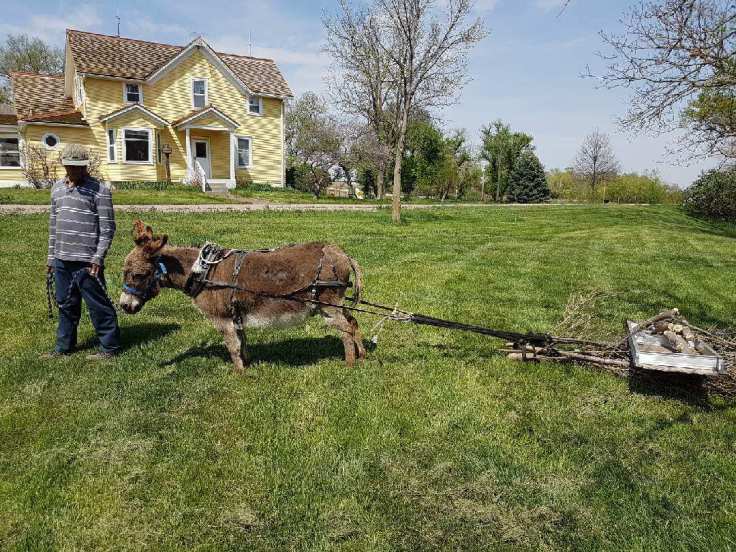


Merry Christmas from everyone at Kindergarten Farm. James went out to help grandma Janette with chores after presents this morning, and was excited to have snow on the ground! God has provided through another year, and we have so much to be thankful for. Thanks to everyone who worked with and did business with us over the past year; we wish you and your families the very best.


Newborn lambs and high winds/drifting snow are a bad combination. Over the weekend we were so thankful to be able to bring the sheep inside. After a midwinter predator attack, we repurposed one end of a building, built a temporary pen, and have brought the sheep in every night since. Some years our 3-sided sheds are adequate even through lambing, but this year late episodes of winter weather have made better shelter essential. We’re still feeding some hay, which is unusual for us in April.
Brutus’ lambs are looking great, and so far we have 6 ewe and 3 ram lambs. Pictured above: Left – Anna and Elsa, 8 hours old. First time mom Iris is doing a great job with them. Middle – our daughter with one of Millie’s triplets. They’re getting a few supplemental bottles, and she calls them “the sniffy babies” because they are quite friendly and come up to nuzzle people. Right – ewes and lambs waiting for the storm to end so they can be outside.
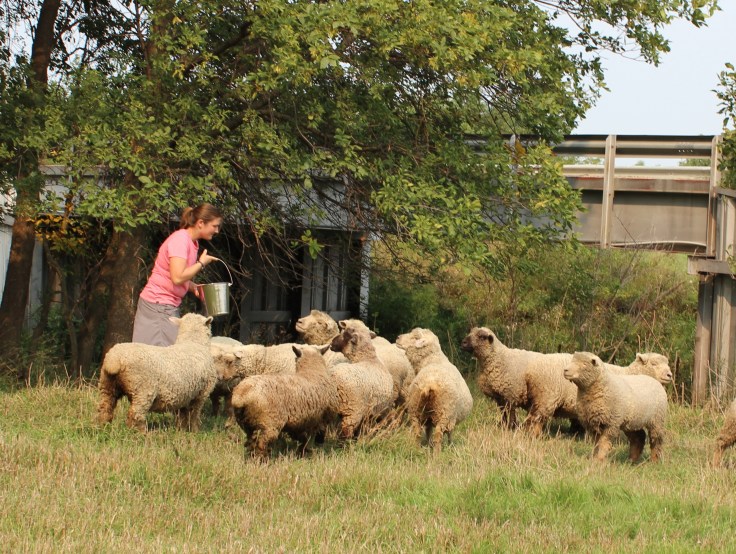
The ewes have moved to a creek-bottom pasture that usually stays nice and green through fall. It’s a season of peaceful grazing and regaining their body condition for the coming breeding season. Their lambs were weaned, and those we sold went to their new homes. Aside from a brief parasite attack in some of the weaned lambs, it was a good summer for the flock. It was the first time we’d needed wormer in several years, and they recovered well. Our area was blessed with late summer rains, which meant greener grass and a better second cutting of hay than some years.
*Note: The sheep don’t get grain as part of their normal diet this time of year; only a small amount occasionally as a treat.


Time to earn some of that hay you’ve been eating all winter, we told the horses! Several groups of children have been out to the home farm for riding lessons, and I (Laura) borrowed a couple to work with at our place. Golden Cloud (“GC”) has been getting used to the idea of pulling a cart. Janette is gearing up for ARC’s summer camp for handicapped kids; this year she’s celebrating 20 years of bringing horses to camp for that fun-loving crowd.


Snowball gave us an exciting start to lambing season with our first ever set of triplets. She is doing a great job, and they are thriving. As of April 18, 5 rams and 4 ewes have been born; more are due any day. Two ewes are available, as well as a few wethers. Rams without buyers are being wethered as we go, so if you’re looking for a ram, let us know and we’ll keep one intact for you.

Only two foals were born on Kindergarten Farm this summer, but we’re enjoying them more than ever. Eclipse is the first full-sized foal we’ve ever had, a Fresian/Walker cross, born to our saddle mare, Caramel. Clyde is a Shetland/Miniature Horse cross, and will be for sale as a weanling this fall. Both have been caught and handled almost every day since birth. This makes them a lot of fun, as they’re getting quite friendly and are leading very well. Pictured with the grandchildren in the driveway is Mouse, one of our favorite older mares. Grandpa wonders if it’s safe to lead a pony before you’re two; grandma says yes – it is under the right circumstances! If you’re interested in a pony/miniature horse, check out our updates to the “Horses for Sale” tab.


It’s the time of year for throwing off last year’s wool, transitioning from hay to lush green grass, and anxiously awaiting new lambs. This is Flopsy, pre- and post-shearing. We did all the shearing ourselves this year (mostly Ben). The results weren’t always pretty, but the job did get done.
 Kindergarten Farm